Thursday 17th May – Dana

This week, the reading was on “Dana”, taken from “The Heart of the Buddha’s Teaching” (Paperback version) pages 193-196.


The Six Paramitas

  1. dana paramita – giving, offering, generosity.

2. shila paramita – precepts or mindfulness trainings.

3. kshanti paramita – inclusiveness, the capacity to receive, bear, and transform the pain inflicted on you by your enemies and also by those who love you.

4. virya paramita – diligence, energy, perseverance.

5. dhyana paramita – meditation.

6. prajña paramita – wisdom, insight, understanding.


Practicing the Six Paramitas helps us to reach the other shore – the shore of freedom, harmony, and good relationships.

The first practice of crossing over is the perfection of giving, dana paramita. To give means first of all to offer joy, happiness, and love. There is a plant, wellknown in Asia — it is a member of the onion family, and it is delicious in soup, fried rice, and omelets — that grows back in less than twenty-four hours every time you cut it. And the more you cut it, the bigger and stronger it grows. This plant represents dana paramita. We don’t keep anything for ourselves. We only want to give. When we give, the other person might become happy, but it is certain that we become happy. In many stories of the Buddha’s former lives, he practices dana paramita (1).

The greatest gift we can offer anyone is our true presence. A young boy I know was asked by his father,

“What would you like for your birthday?” The boy hesitated. His father was wealthy and could give him anything he wanted. But his father spent so much time making money that he was rarely at home. So the boy said, “Daddy, I want you!” The message was clear. If you love someone, you have to produce your true presence for him or for her. When you give that gift, you receive, at the same time, the gift of joy. Learn how to produce your true presence by practicing meditation. Breathing mindfully, you bring body and mind together. “Darling, I am here for you” is a mantra you can say when you practice this paramita.

What else can we give? Our stability. “Breathing in, I see myself as a mountain. Breathing out, I feel solid.” The person we love needs us to be solid and stable. We can cultivate our stability by breathing in and out, practicing mindful walking, mindful sitting, and enjoy living deeply in every moment. Solidity is one of the characteristics of nirvana.

What else can we offer? Our freedom. Happiness is not possible unless we are free from afflictions — craving, anger, jealousy, despair, fear, and wrong perceptions. Freedom is one of the characteristics of nirvana.

Some kinds of happiness actually destroy our body, our mind, and our relationships. Freedom from craying is an important practice. Look deeply into the nature of what you think will bring you happiness and see whether it is, in fact, causing those you love to suffer. You have to know this if you want to be truly free. Come back to the present moment, and touch the wonders of life that are available. There are so many wholesome things that can make us happy right now, like the beautiful sunrise, the blue sky, the mountains, the rivers, and all the lovely faces around us.

What else can we give? Our freshness. “Breathing in, I see myself as a flower. Breathing out, I feel fresh.” You can breathe in and out three times and restore your flowerness right away. What a gift!

What else can we offer? Peace. It is wonderful to sit near someone who is peaceful. We benefit from her peace. “Breathing in, I see myself as still water. Breathing out, I reflect things as they are.” We can offer those we love our peace and lucidity.

What else can we offer? Space. The person we love needs space in order to be happy. In a flower arrangement, each flower needs space around it in order to

radiate its true beauty. A person is like a flower. Without space within and around her, she cannot be happy. We cannot buy these gifts at the market. We have to produce them through our practice. And the more we offer, the more we have. When the person we love is happy, happiness comes back to us right away. We give to her, but we are giving to ourselves at the same time.

Giving is a wonderful practice. The Buddha said that when you are angry at someone, if you have tried everything and still feel angry, practice dana paramita. When we are angry, our tendency is to punish the other person. But when we do, there is only an escalation of the suffering. The Buddha proposed that instead, you send her a gift. When you feel angry, you won’t want to go out and buy a gift, so take the opportunity now to prepare the gift while you are not angry. Then, when all else fails, go and mail that gift to her, and amazingly, you’ll feel better right away. The same is true for nations. For Israel to have peace and security, the Israelis have to find ways to ensure peace and security for the Palestinians. And for the Palestinians to have peace and security, they also have to find ways to ensure peace and security for the Israelis. You get what you offer. Instead of trying to punish the other person, offer him exactly what he needs. The practice of giving can bring you to the shore of well-being very quickly.

When another person makes you suffer, it is because he suffers deeply within himself, and his suffering is spilling over. He does not need punishment; he needs help. That is the message he is sending. If you are able to see that, offer him what he needs — relief. Happiness and safety are not an individual matter. His happiness and safety are crucial for your happiness and safety. Wholeheartedly wish him happiness and safety, and you will be happy and safe also.

What else can we offer? Understanding. Understanding is the flower of practice. Focus your concentrated attention on one object, look deeply into it, and you’ll have insight and understanding. When you offer others your understanding, they will stop suffering right away.

The first petal of the flower of the paramitas is dana paramita, the practice of giving. What you give is what you receive, more quickly than the signals sent by satellite. Whether you give your presence, your stabili

ty, your freshness, your solidity, your freedom, or your understanding, your gift can work a miracle. Dana paramita is the practice of love.

The practice of the Five Mindfulness Trainings is a form of love, and a form of giving. It assures the good health and protection of our family and society. Shila paramita is a great gift that we can make to our society, our family, and to those we love. The most precious gift we can offer our society is to practice the Five Mindfulness Trainings. If we live according to the Five Mindfulness Trainings, we protect ourselves and the people we love. When we practice shila paramita, we offer the precious gift of life.

Let us look deeply together into the causes of our suffering, individually and collectively. If we do, I am confident we will see that the Five Mindfulness Trainings are the correct medicine for the malaise of our times. Every tradition has the equivalent of the Five Mindfulness Trainings. Every time I see someone receive and practice the Five Mindfulness Trainings, I feel so happy – for him, his family, and also for myself – because I know that the Five Mindfulness Trainings are the most concrete way to practice mindfulness. We need a Sangha around us in order to practice them deeply.

The second practice is the perfection of the precepts, or mindfulness trainings, shila paramita. The Five Mindfulness Trainings help protect our body, mind, family, and society. The First Mindfulness Training is about protecting the lives of human beings, animals, vegetables, and minerals. To protect other beings is to protect ourselves. The second is to prevent the exploitation by humans of other living beings and of nature. It is also the practice of generosity. The third is to protect children and adults from sexual abuse, to preserve the happiness of individuals and families. Too many families have been broken by sexual misconduct. When you practice the Third Mindfulness Training, you protect yourself and you protect families and couples. You help other people feel safe. The Fourth Mindfulness Training is to practice deep listening and loving speech. The Fifth Mindfulness Training is about mindful consumption.

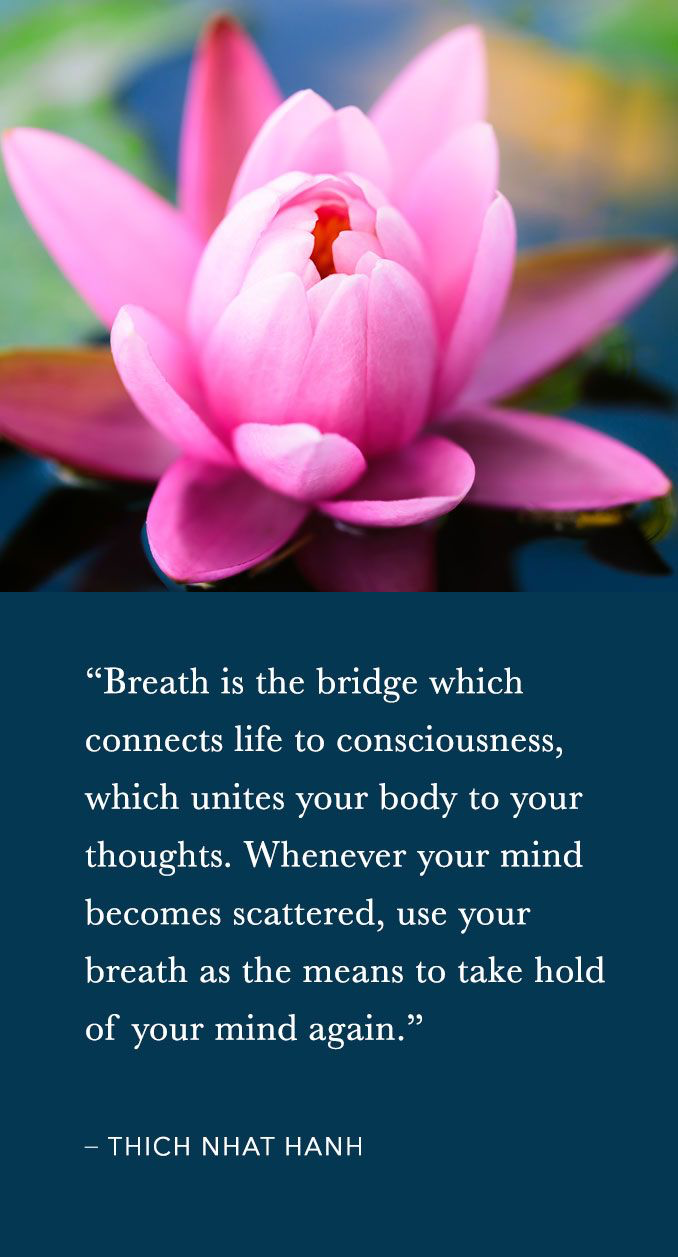

Thursday 27th May 2021

Jonny shared the following reading, taken from pages 12 and 13 of the book “The Heart of the Buddha’s Teaching” by Thich Nhat Hanh.

Understanding the Buddha’s Teachings

WHEN WE HEAR a Dharma talk or study a sutra, our only job is to remain open. Usually when we hear or read something new, we just compare it to our own ideas. If it is the same, we accept it and say that it is correct. If it is not, we say it is incorrect. In either case, we learn nothing. If we read or listen with an open mind and an open heart, the rain of the Dharma will penetrate the soil of our consciousness.

The gentle spring rain permeates the soil of my soul.
A seed that has lain deeply in the earth for many years just smiles.

While reading or listening, don’t work too hard. Be like the earth. When the rain comes, the earth only has to open herself up to the rain. Allow the rain of the Dharma to come in and penetrate the seeds that are buried deep in your consciousness. A teacher cannot give you the truth. The truth is already in you. You only need to open yourself – body, mind, and heart – so that his or her teachings will penetrate your own seeds of understanding and enlightenment. If you let the words enter you, the soil and the seeds will do the rest of the work.

The book chapter continues with much more detail. For those interested, the reference is given below.


Thursday 20th May 2021

Touching Reality as it is

This week, Barbara will be facilitating the session and has chosen a recording of Thay “Touching Reality as it is ” which may help to address some of the questions from last week.

If you wish, you may want to watch the following video in advance:

This week’s meeting will be at the usual time of 7:30PM (UK time).

Please join with the usual Zoom link: Join our Cloud HD Video Meeting now and Jonny will let you in.


Christmas Arrangements 24th and 25th Dec

Dear Friends 
After a bit of deliberation , a plan for the festive ?? season has emerged .There will be a session on CHristmas eve 7.30-9pm for which a theme will probably show itself . In addition there will also be a shorter 1hr session on Dec 25th 9-10am For the Christmas  Day session it might be helpful if people could bring a poem or quotation that speaks to them as a “gift” and recite it .
Perhaps you could let me know whether you would like to attend either / both of these , although it is not essential . Numbers are likely to be small as many  people have family commitments at this time of year.
I hope the last minute changes of plans have not affected you all too adversely and that you manage to connect with family ,friends , nature or art in some form , despite the restrictions.
Links for the above will be our usual thursday link , so please ignore any timings from Zoom 

The Quote this week comes from Eileen ( From Thay )  and is attached .
With a Smile
Jonny

Thursday 3rd Dec Living without Loneliness

This week Barbara was the facilitator for the session and we will enjoyed a reading on a better way to live without loneliness.

This is reproduced from Mindfulness Bell below

Her quotation for this week is from the man who was involved in setting up the Zen Hospice in San Fransisco .

“ Peace and stillness are not something you can create: instead, we notice them when we stop trying to make them happen” Frank Ostesseki

( A 21st Century rewording of The Discourse on Happiness  composed by Order of Interbeing member David Viafora and published the autumn 2020 issue of THE MINDFULNESS BELL, the bi-monthly magazine of the international Plum Village community).

I heard these words of the Buddha one time when the Awakened One was staying at MorningSun Community in the Maple Grove near Lily Pond.  Just around sunset, a deva appeared, whose light and beauty made the whole pond and all the star lilies shine radiantly.  After paying respects to the Buddha, the deva asked him a question in the form of a verse:

“ Many women, gender queer, and men, those of African, Native American, Indigenous, Asian, Pacific Islander, latinx, Middle Eastern, European, and mixed descent are all eager to know, what are the ways to end loneliness, fear, and isolation during a global pandemic in order to bring about good friendships for a peaceful and happy life?

Please, Awakened One, will you teach us?”

This is the Buddha’s answer:

Not to be associated with foolish websites,

To be online in the company of wise people,

Zooming those who are worth Zooming,

This brings the greatest friendship.

To walk often in good environments,

To have planted good seeds in your garden or flower pots,

And to realise that you have many kinds of plant friends on your path,

This brings the greatest friendship.

To have a chance to learn and grow in more online Dharma classes than ever before,

To be skilful in calling and listening deeply to friends in need,

Practising kind speech, love letters, written cards, and sincere apologies often,

This brings the greatest friendship.

To be able to serve and support your parents and grandparents by not visiting or touching them, 

To cherish your time online with your family,

And to have walking companions who bring you joy,

This brings the greatest friendship.

To sit alone intimately with a lake, tree, rock cloud, sunset or your breath,

Knowing they too are your true relatives and spiritual companions,

Living a life rich with appreciations and wondrous gratitudes,

This brings the greatest friendship.

To be honest about your daily screen time, and generous in time with others,

To offer your support to many human, animal and plant friends,

Living a life of blameless sanitation,

This brings the greatest friendship.

To be humble and polite, and mute yourself on Zoom,

To be grateful and content with a simple haircut,

Not missing the occasion to watch the most recent YouTube Dharma talk,

This brings the greatest friendship.

To avoid unwholesome news and crowded places,

Not caught by Facebook, Amazon, and other addictions,

And to be diligent in wearing your mask,

This brings the greatest friendship.

To live openly and honestly about one’s privileges and power,

To be grateful and content sharing resources and reparations,

Not missing the occasion to learn to become a better ally,

This brings the greatest friendship.

To persevere with six feet apart and be open to air high-fives,

To have regular contact with soil, compost, worms, flowers and vegetables,

And to fully participate in Sanghas on multiple continents,

This brings the greatest friendship.

To walk outside diligently, skipping often and joyfully,

To perceive that others need your kindness and joy right now too,

And to realise that you are not at all alone in this,

This brings the greatest friendship.

To live in the world of illness, dying, and physical isolation,

With your heart broken open by the world and ceaselessly healing,

With all hurts slowly forgiven, dwelling in gentle compassion for yourself and all beings,

This brings the greatest friendship.

For she, he or they who accomplish this,

Tenderly embracing loneliness and isolation within themselves,

Always they feel safe, included and empathetically connected;

Friendship lives within oneself.

What actually is this webpage?

When we open our browser and type in a URL or click a link, we see a rendered web page spread across our screen. It’s fonts, graphic images and words construct an image with it’s own identity.

But at a physical level, it can take on a whole new meaning. At one level, we hear it all just a series of ‘1’ and ‘0’ binary digits stored in computer memory. Go deeper and you’re into the mysterious quantum world of electronic semiconductors. These things are hard to grasp and visualise of course.

Much more tangible is the computer itself. When you open the webpage, somewhere (ok, my kitchen as it turns out) a small computer wakes up and begins a flurry of electronic activity, serving up the data that renders this very page.

The actual computer is a credit-cart sized “Raspberry Pi”. To get a sense of scale, here it is next to my keyboard

The computer (aka Server) is a Raspberry Pi. A cheap low power computer that is approximately the size of a credit card. It is switched on 24/7, listening for incoming connections from the Internet, from anywhere in the world.

A peek inside and we can see the electronics. The larger black square is the “CPU” – this runs the software that generates the web pages in real time.

The actual computer is even smaller. It is strange how something so small produces a rendered page so quickly. Every time you access a new page, this tiny chip fetches data from its memory, generates a webpage that your device can display and sends it back to you over the Internet.

You can just about see the micro-SD storage card housing. A tiny chip inside this is where all the software and webpage data is stored. These incredibly dense object storage devices are only 165 cubic millimetres in volume!

When it comes to it, the web page is only a tiny fraction of the data used by the computer. In volume terms, it’s a tiny dot within the 165 cubic millimetre volume of the whole storage device.

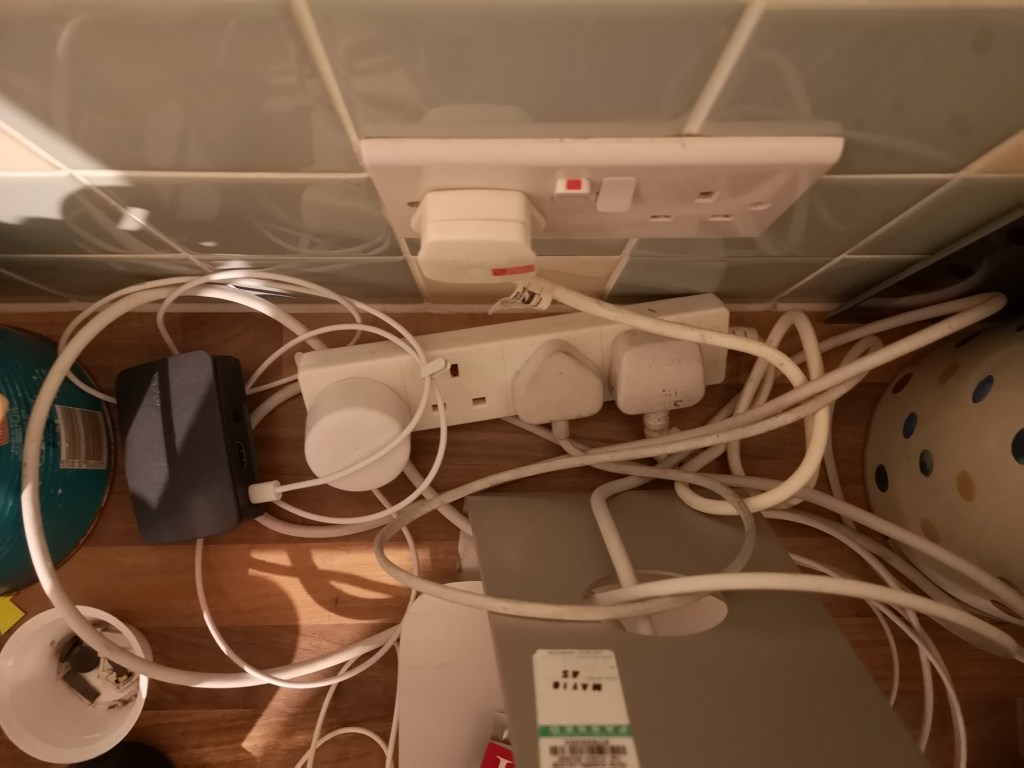
Not exactly a data centre! Hidden behind the kitchen computer, the Raspberry Pi server is tucked away out of sight among the other tangle of wires.

This web site is very much a proof of concept, but it’s pleasing what can be done with a £30 computer hooked up to home broadband and tucked out of sight in a kitchen. The wiring does need to be hidden from my wife however 🙂

Going forwards, we may need to move this webpage to a “proper” hosting solution where the computers are backed up, maintained in a controlled climate, and where there is no risk that someone doing the washing-up will pour soapy water over the whole facility.

Nick