( From “ The Art of Living” by Thich Nhat Hanh pages 99 – 101)
My name, Nhat Hanh, means ‘ one action’. I spent a long time trying to find out which action this was. Then I discovered that my one action is to be peace and to bring peace to others.
We have a tendency to think in terms of doing and not in terms of being. We think that when we’re not doing anything, we’re wasting our time. But that’s not true. Our time is first of all for us to be. To be what? To be alive, to be peaceful, to be joyful, to be loving. And this is what the world needs most. We all need to train ourselves in our way of being, and that is the ground for all action.
Our quality of being determines our quality of doing.
There are those who say, “ Don’t just sit there – do something!” When we see injustice, violence, and suffering all around us, we naturally want to do something to help. As a young monk in Vietnam in the 1950’s and ’60’s, together with my friends and students, we did everything we could to create a grassroots Buddhism that could respond to the enormous challenges and suffering of the times. We knew that offering chants and prayers was not enough to save the country from the desperate situation of conflict, division, and war.
We began publishing a large national weekly Buddhist magazine, started thee School of Youth for Social Service to bring relief and support to the villages devastated by the war, and also founded Van Hannah University in Saigon to offer a more modern approach to education for the young generation. In all this work, we learned that the quality of our action depended on the quality of our being. So every week we organised a whole day of mindfulness practice at the nearby Bamboo Forest Monastery. There we practiced sitting meditation, walking meditation, and mindful walking together, and we took time to listen deeply to one another’s challenges and joys. With the energy of brotherhood and sisterhood, we created a wonderful, happy place of refuge.
So as well as saying “ Don’t just sit there – do something!” we can also say, “ Don’t just do something – sit there!” Stopping, being still, and practicing mindfulness can bring about a whole new dimension of being. We can transform our anger and anxiety, and cultivate our energy of peace, understanding, and compassion as the basis for action. The energies of wisdom, compassion, inclusiveness, fearlessness, patience, and non-discrimination – never disparaging anyone- are all qualities of awakened beings. Cultivating these energies helps us bring the ultimate dimension into the historical dimension, so we can live a life of action in a relaxed and joyful way, free from fear, stress and despair. We can still be very active but do everything from a place of peace and joy. This is the kind of action that is most needed. When we can do this, the work we do will be of great help to ourselves and the world.
During our meeting in Clearbrook, we observed the five mindfulness trainings.
The Five Mindfulness Trainings represent the Buddhist vision for a global spirituality and ethic. They are a concrete expression of the Buddha’s teachings on the Four Noble Truths and the Noble Eightfold Path, the path of right understanding and true love, leading to healing, transformation, and happiness for ourselves and for the world. To practice the Five Mindfulness Trainings is to cultivate the insight of interbeing, or Right View, which can remove all discrimination, intolerance, anger, fear, and despair. If we live according to the Five Mindfulness Trainings, we are already on the path of a bodhisattva. Knowing we are on that path, we are not lost in confusion about our life in the present or in fears about the future.
The reading this week was from Breathe! You are Alive ( Thay’s commentary on the Sutra on the Full Awareness of Breathing ) on exercises 5 & 6.
The Fourth Subject of Full Awareness: Nourishing ourselves with the joy of meditation (Exercises 5-6)
Exercise 5: “I am breathing in and feeling joyful. I am breathing out and feeling joyful.”
Those who practice meditation should know how to nourish themselves on the peace and joy of medItative concentration, in order to reach real maturity and help the world. Life in this world is both painful and miraculous. The Buddhist traditions of the Southern schools stress the painful side, while the Buddhist traditions of the Northern schools help us realize and appreciate the marvels of life. The violet bamboo, the yellow flowers, the white clouds, and the full moon are all wondrous expressions of the Dharmakaya, the body of the Dharma. The body of a human being, although impermanent, without an independent self, and bound to suffering, is also infinitely wondrous. The initial joy of meditation is like leaving the city, with its hyperactivity and all its disturbing encounters, going off to the countryside to sit beneath a tree, alone. We feel totally at ease, peaceful and joyful. What a joy, what a relief, like when you complete a difficult examination and feel that you have laid aside all anxiety forevermore.
At the end of a busy day, you can turn off the TV, light a stick of incense to make the room fragrant, sit cross-legged, and begin to practice breathing, with a half-smile. You will feel great joy! This is the initial sensation of the peace and joy of meditation. The fifth breathing method helps us become aware of this sensation. If you can set aside the stresses and complications of your day, you will enter a meditation filled with joy. From this state, it is easy to arrive at the state of peace and happiness.
Exercise 6: “I am breathing in and feeling happy. I am breathing out and feeling happy.”
The sixth method establishes awareness of peace and happiness which arises when we become free of incessant worrying and preoccupation, and from the fact that the body and mind are at ease.
When we have a toothache, we know that not having a toothache is a pleasurable feeling. But when we do not have a toothache, most of us are unaware of this pleasant feeling. Only after we become blind will we be aware that having eyes to see the blue sky and the white clouds is miraculous. While we can see, we are rarely aware of this miracle. Practicing meditation is to be aware of both what is painful and what is miraculous. Happiness is the nourishment of the meditator, and it is not necessary to look for it outside of ourselves. We only need to be aware of the existence of happiness in order to have it immediately. Pleasant feelings are like the air around us we can enjoy them as we need them.
In Buddhist psychology, it is said there are three kinds of feelings: pleasant, unpleasant, and neutral. But when we practice meditation, we know that we can transform neutral feelings into pleasant ones, and nourish ourselves. Pleasant feelings transformed from neutral ones are more healthy and lasting than other pleasant feelings. When we are constantly nourished by the happiness of meditation, we become at ease with ourselves and others. We become tolerant and compassionate, and our happiness is transmitted to all those around us. Only if we have peace ourselves can we share peace with others. Only then do we have enough strength and patience to work helping others, facing many hardships with patience and perseverance.
This week we read the first chapter of The Miracle of Mindfulness , one of Thich Nhat Hanh’s first books and perhaps the one that really made Buddhist Practice accessible to a wider Western Audience.
This lead to a sharing on the topic of “Time ” and how we regard it.
One The Essential Discipline YESTERDAY ALLEN CAME over to visit with his son Joey. Joey has grown so quickly! He’s already seven years old and is fluent in French and English. He even uses a bit of slang he’s picked up on the street. Raising children here is very different from the way we raise children at home. Here parents believe that “freedom is necessary for a child’s development.” During the two hours that Allen and I were talking, Allen had to keep a constant eye on Joey. Joey played, chattered away, and interrupted us, making it impossible to carry on a real conversation. I gave him several picture books for children but he barely glanced at them before tossing them aside and interrupting our conversation again. He demands the constant attention of grown-ups. Later, Joey put on his jacket and went outside to play with a neighbor’s child. I asked Allen, “Do you find family life easy?” Allen didn’t answer directly. He said that during the past few weeks, since the birth of Ana, he had been unable to sleep any length of time. During the night, Sue wakes him up and—because she is too tired herself—asks him to check to make sure Ana is still breathing. “I get up and look at the baby and then come back and fall asleep again. Sometimes the ritual happens two or three times a night.” “Is family life easier than being a bachelor?” I asked. Allen didn’t answer directly. But I understood. I asked another question: “A lot of people say that if you have a family you’re less lonely and have more security. Is that true?” Allen nodded his head and mumbled something softly. But I understood. Then Allen said, “I’ve discovered a way to have a lot more time. In the past, I used to look at my time as if it were divided into several parts. One part I reserved for Joey, another part was for Sue, another part to help with Ana, another part for household work. The time left over I considered my own. I could read, write, do research, go for walks. “But now I try not to divide time into parts anymore. I consider my time with Joey and Sue as my own time. When I help Joey with his homework, I try to find ways of seeing his time as my own time. I go through his lesson with him, sharing his presence and finding ways to be interested in what we do during that time. The time for him becomes my own time. The same with Sue. The remarkable thing is that now I have unlimited time for myself!” Allen smiled as he spoke. I was surprised. I knew that Allen hadn’t learned this from reading any books. This was something he had discovered for himself in his own daily life.
Hanh, Thich Nhat. The Miracle Of Mindfulness (Classic Edition) (pp. 1-3). Ebury Publishing. Kindle Edition.
The evening was devoted to practising the meditation technique of ‘mere recognition’ and sharing our reflections on what helps us most in our personal practice of meditation. It was a useful introduction and reminder of our meditation posture and technique.
The piece we read was the first 4 paragraphs from the preface ( pages vii – viii) of “The Blooming of a Lotus” by Thay:
Reading Transcript
The function of meditation practice is to heal and transform. Meditation, as understood in my tradition of Buddhism, helps us to be whole and to look deeply into ourselves and around us in order to realize what is really there. The energy that is used in meditation is mindfulness; to look deeply is to use mindfulness to light up the recesses of our mind, or to look into the heart of things in order to see their true nature. When mindfulness is present, meditation is present. Mindfulness helps us to understand the true essence of the object of meditation (whether it is a perception, an emotion, an action, a reaction, the presence of a person or object).
By looking deeply, the meditation practitioner gains insight, prajñā, or wisdom. This insight has the power to liberate us from our own suffering and bondage. In the meditation process, fetters are undone; internal blocks of suffering such as fear, anger, despair, and hatred are transformed; relationships with humans and nature become easier; freedom and joy penetrate. We become aware of what is inside us and around us; we are fresher, more alive in our daily existence. As we become freer and happier, we cease to act in ways that make others suffer, and we are able to bring about change around us and to help others become free.
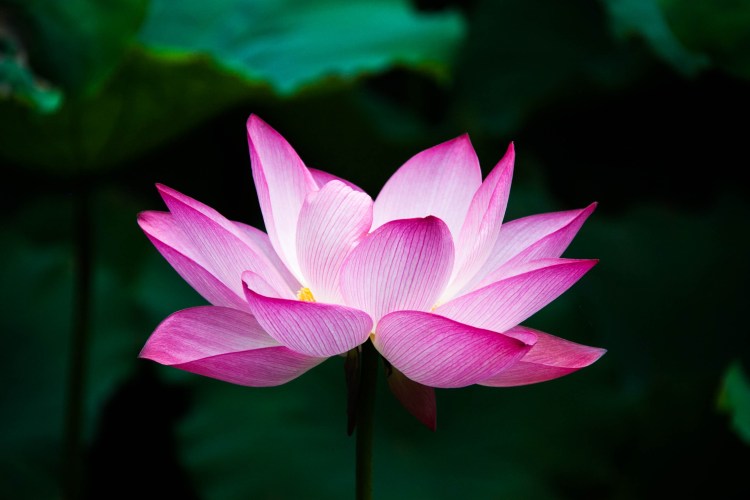
The energy of mindfulness is constantly produced, nurtured, and strengthened during meditation. The meditation practitioner is like a lotus flower in the process of blooming. Buddhas are fully bloomed human flowers, beautiful and refreshing. All of us are buddhas to be. That is why in practice centers when people meet each other, they form a lotus with their palms and greet each other while bowing, saying: “A lotus for you, a buddha to be.” As they inhale while saying “a lotus for you” and exhale, smiling, while saying “a buddha to be,” they have the appearance of a blooming flower.
It may be possible for you to meditate on your own, without a teacher or a Sangha, namely, a Buddhist community of practice. But it goes without saying that to practice with a teacher and a Sangha is more advisable and much easier than to practice without them. A teacher is someone who has had experience of the practice and has succeeded in it. A Sangha is a meditation community where everyone follows more or less the same kind of practice. Since everyone is doing the same practice, it becomes easier for you to practice, too, because the group energy emitted by the Sangha is strong and very supportive. You can also learn a great deal from individual members of the Sangha, especially those who have realized some degree of peace and transformation. There are many things you may find difficult to do when alone, but in the presence of the Sangha you can do them easily. All of us who have practiced with a Sangha can testify to this fact.
Thich Nhat Hahn., “The Blooming of a Lotus” (Revised Edition)., Preface pp vii-viii
We will meet this Thursday and meditation will start at 7.30 pm.
This week we will read the 5 Mindfulness Trainings, and if anyone would be interested in reading one of these during the session please let Jonny know.
In place of a quote this week is a link sent by Nick Outram. As he mentioned, it illustrates interbeing rather beautifully via a rewilding project in Yellowstone Park in the USA and is about 4mins 30 secs long.


 Plymouth Sangha